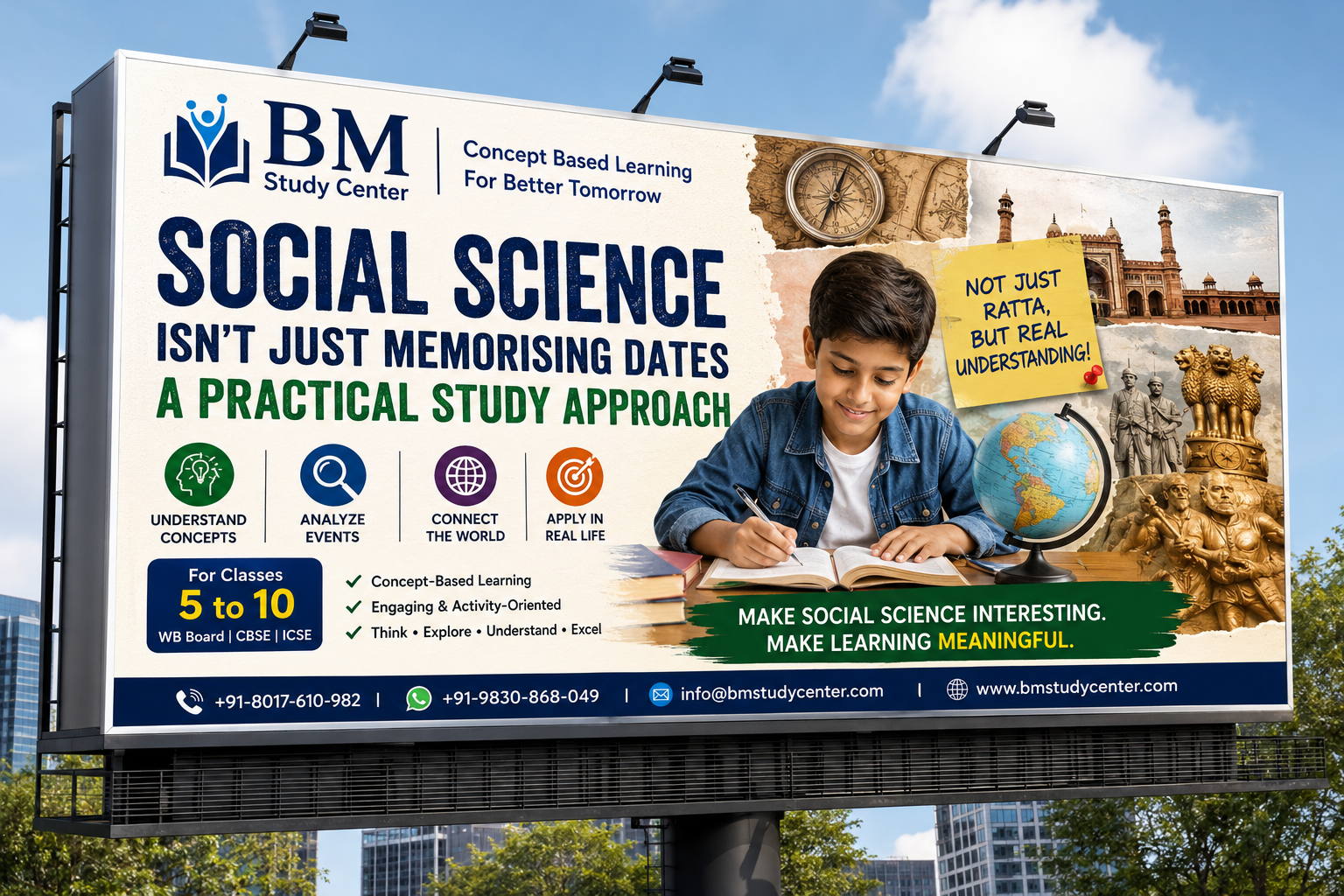
Ask a student what Social Science is about and the answer is usually "dates and maps." It's an understandable reply — but it misses what actually makes the subject worth learning: Social Science is the study of human society, history, and the world we live in, and done well, it explains why the news makes sense, how a government actually runs, and why a region's geography shapes the way people live there.
The subject spans six connected areas: History, Geography, Civics, Economics, Political Science, and Current Affairs. History covers ancient civilizations, medieval kingdoms, and the modern period, but the point isn't memorising a timeline — it's understanding why events happened and how they connect to the present. Geography goes beyond naming mountains and rivers, extending into climate patterns, natural resources, population distribution, economic activity, and map-reading as a practical skill in its own right. Civics and Economics round it out — how government actually functions, what rights and responsibilities citizens hold, and the basic economic principles behind everyday decisions.
What separates a Social Science class that sticks from one that doesn't is whether these ideas get connected to real, current situations rather than left as isolated chapters. A lesson on government structure means far more when it's tied to something in that week's news; a geography chapter on natural resources lands better when a student can relate it to a place they've actually seen. This is the approach behind the Social Science course at BM Study Center — treating history, geography, civics, and economics as one connected picture of society, not six separate subjects to cram before an exam.
Whether a student follows WB Board, CBSE, or ICSE, the underlying goal is the same: building an informed, well-rounded understanding that goes beyond passing a test, preparing students to be informed, responsible citizens who can actually make sense of the world around them — not just recall it on demand.
A few simple habits help outside the classroom too: talking through a current news story at home and asking how it connects to something studied in class, using an actual map when a geography topic comes up, and revising history as a connected story rather than a list of isolated dates.
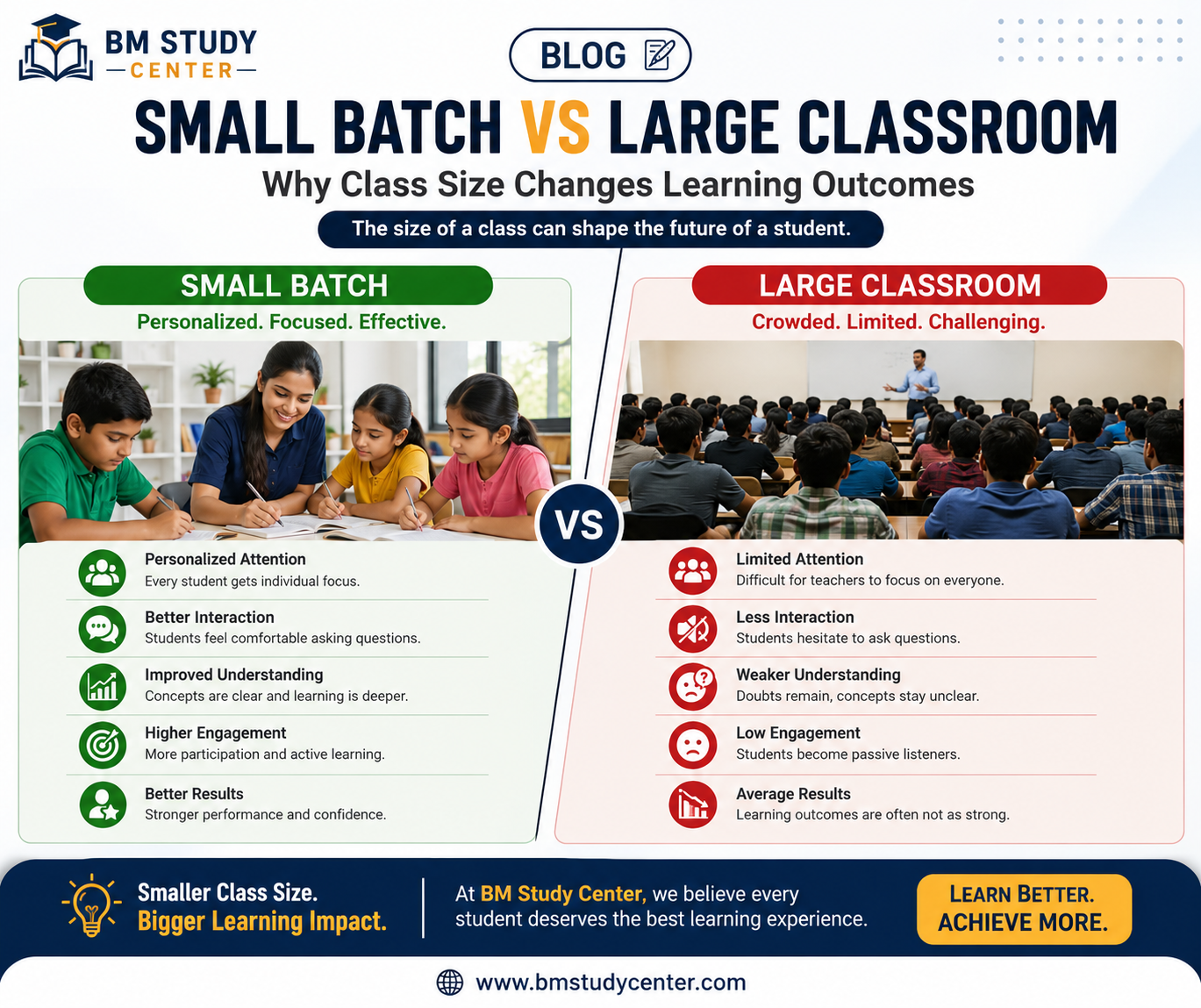
If your child needs structured, small-batch help with Social Science — or any other subject — explore the courses at BM Study Center or get in touch to book a free demo class.
Ask a student what Social Science is about and the answer is usually "dates and maps." It's an understandable reply — but it misses what actually makes the subject worth learning: Social Science is the study of human society, history, and the world we live in, and done well, it explains why the news makes sense, how a government actually runs, and why a region's geography shapes the way people live there.
The subject spans six connected areas: History, Geography, Civics, Economics, Political Science, and Current Affairs. History covers ancient civilizations, medieval kingdoms, and the modern period, but the point isn't memorising a timeline — it's understanding why events happened and how they connect to the present. Geography goes beyond naming mountains and rivers, extending into climate patterns, natural resources, population distribution, economic activity, and map-reading as a practical skill in its own right. Civics and Economics round it out — how government actually functions, what rights and responsibilities citizens hold, and the basic economic principles behind everyday decisions.
What separates a Social Science class that sticks from one that doesn't is whether these ideas get connected to real, current situations rather than left as isolated chapters. A lesson on government structure means far more when it's tied to something in that week's news; a geography chapter on natural resources lands better when a student can relate it to a place they've actually seen. This is the approach behind the Social Science course at BM Study Center — treating history, geography, civics, and economics as one connected picture of society, not six separate subjects to cram before an exam.
Whether a student follows WB Board, CBSE, or ICSE, the underlying goal is the same: building an informed, well-rounded understanding that goes beyond passing a test, preparing students to be informed, responsible citizens who can actually make sense of the world around them — not just recall it on demand.
A few simple habits help outside the classroom too: talking through a current news story at home and asking how it connects to something studied in class, using an actual map when a geography topic comes up, and revising history as a connected story rather than a list of isolated dates.
If your child needs structured, small-batch help with Social Science — or any other subject — explore the courses at BM Study Center or get in touch to book a free demo class.